Non-Frost-Protected Foundations for Accessory Structures in Massachusetts
Not every structure needs to go below the frost line. For storage sheds, greenhouses, and gazebos with a wood floor, a non-frost-protected foundation is the right call — and a well-built stone pad is what we recommend. Here's how it works.
What Is a Non-Frost-Protected Foundation?
A non-frost-protected foundation sits on or near the surface. It doesn't extend below Massachusetts' 48-inch frost line, which means it can experience minor movement with the freeze-thaw cycle. For the right structure, that's not a problem. A properly built stone pad handles seasonal movement without issue. For the wrong structure — anything requiring a concrete floor, or anything large enough to require a deeper foundation by code — it's the wrong tool. If you're not sure which category your project falls into, see our overview post: Do I Need a Foundation for My Accessory Structure in Massachusetts?
The Stone Pad: What It Is and Why We Use It
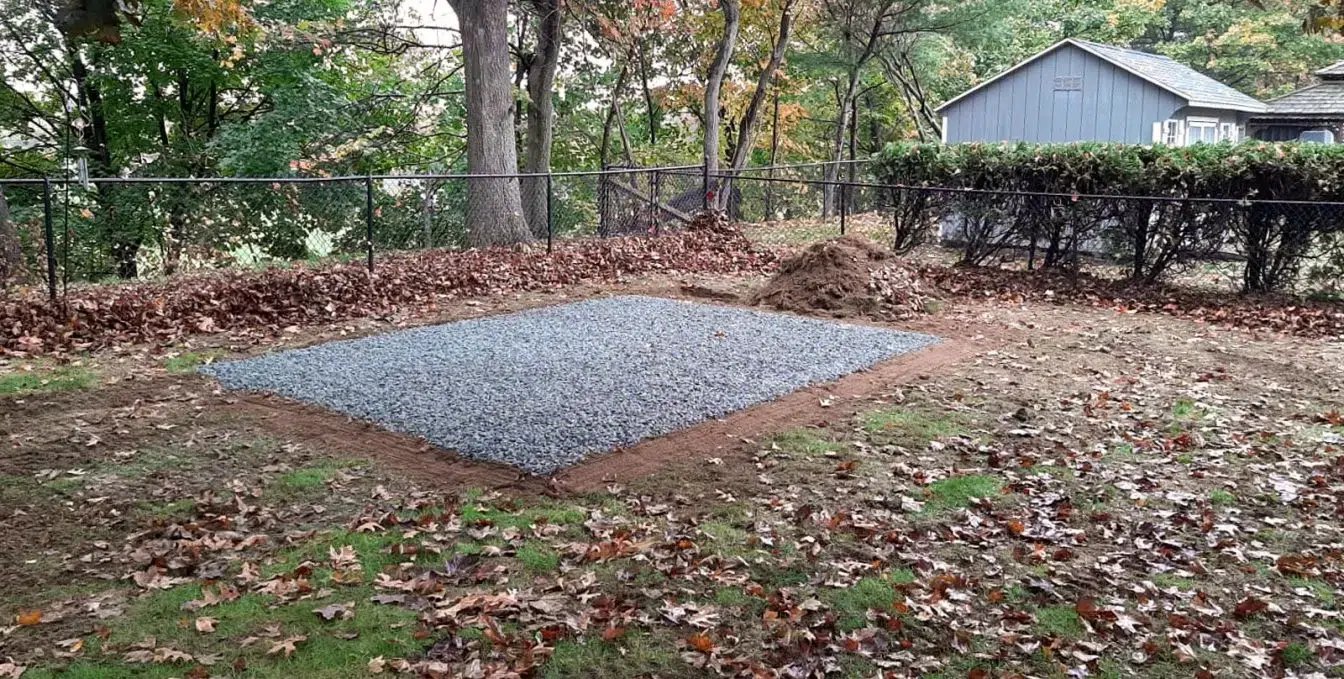
For storage sheds, greenhouses, and gazebos with a wood floor, we recommend a stone pad: a bed of 3/4-inch crushed stone, 4 to 6 inches deep, sized slightly larger than the footprint of the structure. Two things make a stone pad the right foundation for these structures. First, even weight distribution. The weight of the shed and its contents spreads evenly across the surface of the stone pad rather than concentrating at a few points. That's better for the structure and better for the ground beneath it. Second, drainage. Water runs off the roof and hits the ground at the perimeter. On bare soil or grass, that water sits. On a stone pad, it drains away through the clean 3/4-inch stone — keeping the base of your structure dry, which is where rot starts if moisture is allowed to accumulate.
How We Size the Stone Pad
The pad extends beyond the structure on all four sides — not flush with the walls. That overhang is what makes the drainage function work: the clean stone perimeter catches roof runoff and carries it away from the building. How much overhang depends on the product line. For the Econoline and Keystone series, the pad extends one foot beyond the structure on all four sides — so a 12x16 shed gets a 14x18 stone pad. For the New England and Homestead series, the pad extends 18 inches beyond the structure on all four sides — so a 12x16 shed gets a 15x19 stone pad. The deeper overhang on the New England and Homestead lines reflects the larger roof overhangs on those structures. More roof means more runoff, and the pad is sized to handle it.
Size Limits: What the Code Allows
Massachusetts building code sets clear limits on when a non-frost-protected foundation is permissible. For single-story structures with a sidewall height of 10 feet or less, a stone pad is acceptable for structures up to 600 square feet. For two-story structures, or any structure with a sidewall height greater than 10 feet, a stone pad is only acceptable up to 400 square feet. Above that threshold, a frost-protected foundation is required. That second rule catches more projects than people expect. If you're considering a larger shed with a loft, or a structure with taller walls for more headroom, you may be in frost-protected territory sooner than you think.
What a Stone Pad Is Right For
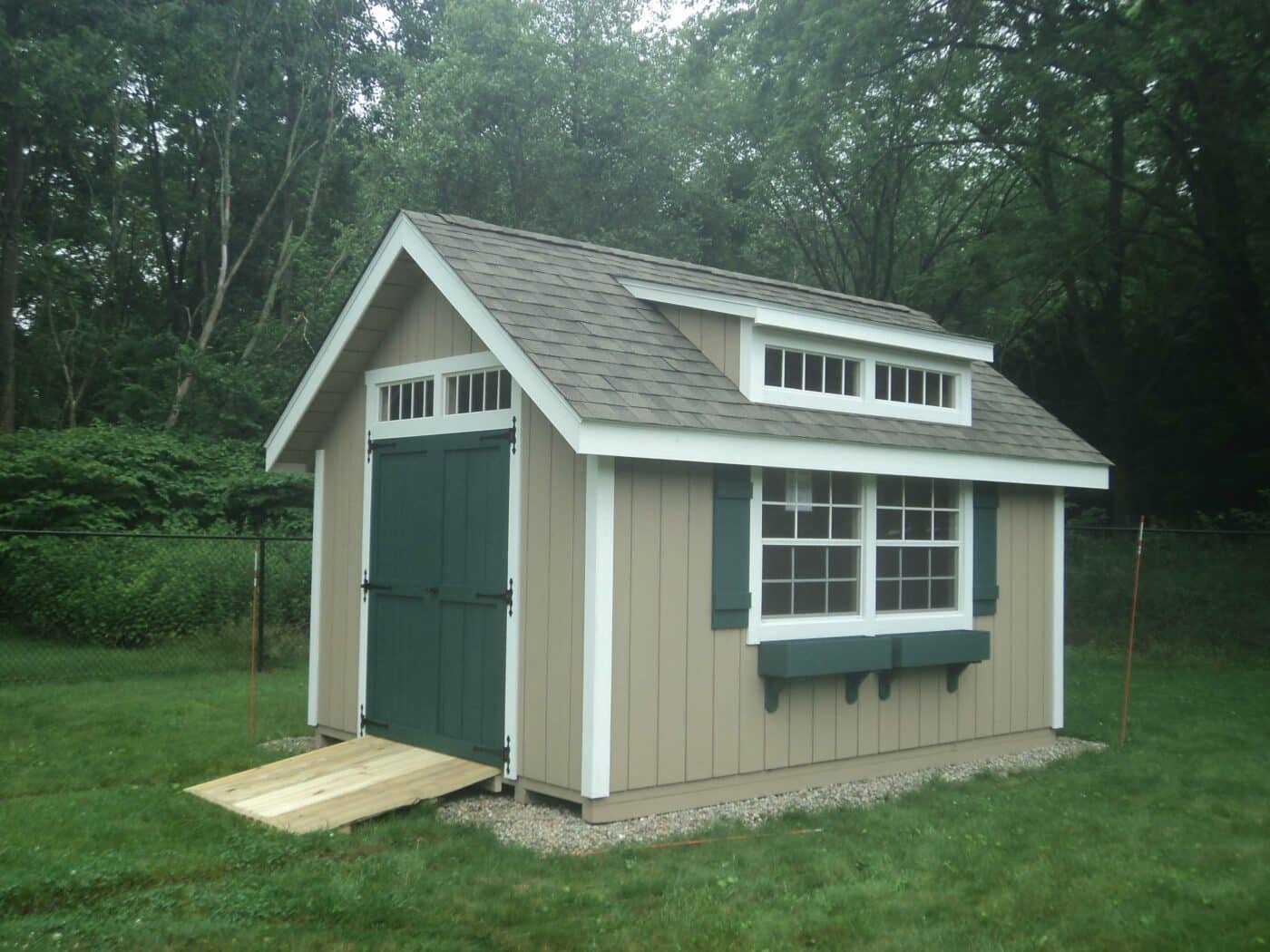
Storage sheds across all of our product lines — Econoline, Keystone, New England, and Homestead — provided they fall within the size limits above. Greenhouses. Gazebos with a wood floor. If your project fits one of these categories and stays within the applicable square footage threshold, a stone pad is what we'll recommend. It's well-matched to these structures, cost-effective, and performs reliably in New England conditions. If you're building a garage, or your project exceeds the size limits, see our post on frost-protected foundations for accessory structures in Massachusetts.
Frequently Asked Questions
Questions About Your Foundation Options?
We handle site preparation on every project we install and can help you figure out exactly what your structure needs. Call us at 413-562-7171 or stop by our display lot in Western Massachusetts.